

Asset protection for high-net-worth individuals is not a single product scaled to wealth. It is a structure matched to an exposure profile. A physician with $5 million and malpractice exposure needs something different from a real estate investor with $10 million across three states, and both need something different from a founder eight months from a liquidity event. What they share is that the window closes once a claim is foreseeable.
This page covers what actually protects at each tier, what the common tools do and do not do, and the timing rule that decides all of it.
Key Points
- Exposure profile decides the structure, not net worth alone. Two people at $8 million can need entirely different plans.
- Insurance is a first layer, not a strategy. It pays within limits, subject to exclusions, and carriers litigate coverage.
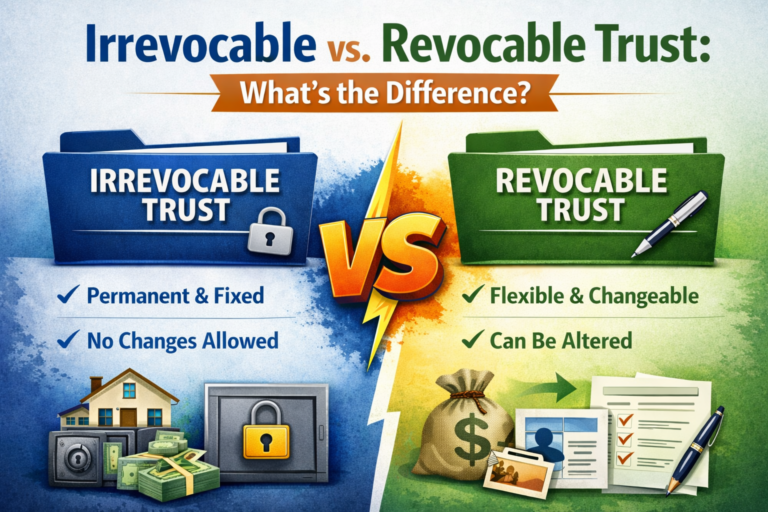
- A revocable living trust provides no lifetime creditor protection. It is a probate tool.
- Domestic asset protection trusts fail for out-of-state settlors — Alaska’s own supreme court said so in Toni 1 Trust v. Wacker.
- Real estate is governed by the law where it sits. You cannot move dirt.
- Timing is the threshold question. Structures built after a claim is foreseeable are voidable transfers.
Am I “High Net Worth” for Asset Protection Purposes?
The threshold that matters is not a wealth label. It is whether you hold assets a plaintiff’s attorney would find worth pursuing, in a form they can reach. That usually starts around $1–2 million in exposed assets, and the structure changes materially at roughly $5 million, $10 million, and $25 million.
Wealth management defines high net worth at $1 million in investable assets and ultra-high-net-worth at $30 million. Those are marketing segments. They do not describe legal exposure.
The question that decides whether planning is worth doing is narrower: how much do you hold in a form a judgment creditor can actually reach, and how likely is a claim?
A surgeon with $4 million, most of it in a practice, brokerage accounts, and home equity, has more usable exposure than someone with $8 million tied up in a qualified retirement plan and a homestead in a state with an unlimited exemption. Net worth is the wrong denominator. Exposed, non-exempt, reachable assets is the right one.
Practical thresholds, from what I actually see:
Under roughly $800k exposed — exemption planning, entity hygiene, and proper insurance usually helps do the work. A full structure often costs more than it protects.
$1M to $2M — entity layering becomes worth it. State-matched LLCs for risky assets, a proper holding structure above them, and a serious look at whether existing insurance actually covers the exposure.
$2.5M to $10M — this is where domestic-only planning starts failing in a way that matters. If you live in California, New York, Florida, Texas, or Illinois, a domestic self-settled trust provides no protection against your own creditors by statute.
$10M and above — generational transfer tax enters the picture alongside creditor exposure, and the two problems are usually solved separately by different advisors who never speak. That is the gap.
$25M+ — the planning becomes multi-jurisdictional by necessity, and the coordination question between attorney, CPA, and wealth manager matters as much as the structures themselves.
What Actually Threatens High-Net-Worth Individuals?
Not “lawsuits” generally. Specific, profile-dependent exposures — malpractice above policy limits, premises and construction claims, personal guarantees, employment litigation, and post-liquidity claims that arrive after a sale closes.
Physicians and surgeons. Malpractice exposure above policy limits is the recognizable risk. The one people miss is that a verdict exceeding coverage becomes a personal judgment, and a personal judgment reaches the brokerage account, the rental properties, and the practice equity.
Real estate investors and developers. Premises liability, construction defect claims, landlord-tenant litigation, and — most commonly — personal guarantees on recourse debt. A guarantee defeats entity separation entirely, because the creditor has a claim against you rather than against the entity.
Business owners. Employment claims, partnership disputes, fiduciary-duty claims in closely held structures, and guarantee enforcement when a deal turns.
Founders and executives pre-liquidity. The highest-leverage moment in this entire field, and the most commonly missed. Before a sale closes, appreciation has not yet occurred inside your taxable estate and no claim exists. After it closes, you hold liquid assets, a public transaction record, and a much shorter list of options.
Everyone. Divorce, which is a different problem — a trust shields you from creditors, but a divorce court with personal jurisdiction over a spouse can still enter an offsetting award against you personally.
Does Insurance Protect High-Net-Worth Assets?
It is a necessary first layer and it is not a strategy. Insurance pays within policy limits, subject to exclusions, after the carrier decides coverage applies. The claims that threaten high-net-worth individuals are precisely the ones that exceed limits or fall outside them.
This matters because insurance queries are among the most common searches in this area, and the honest answer is more useful than the sales answer.
What insurance does well: it covers the frequent, moderate claims, and it funds a defense. A high-limit umbrella policy is genuinely worth having and is inexpensive relative to what it covers.
Where it stops. A verdict above policy limits becomes your personal liability. Intentional acts, certain professional conduct, and business-related claims are commonly excluded. Carriers litigate coverage, and a coverage dispute arrives at the worst possible time. And you cannot buy coverage for a claim you already know about.
On Private Placement Life Insurance and cash-value products: these have legitimate uses in tax-efficient asset growth and, in some states, meaningful creditor exemptions for cash value and death benefit. They are not a substitute for structural protection, their creditor treatment varies significantly by state, and they should be evaluated by someone with no commission interest in the answer.
The correct sequence is insurance and structure, not insurance or structure.
Why Do Standard Plans Fail at This Level?
Because most estate planning is built for transfer at death, not defense during life — and the two most commonly recommended tools provide no lifetime creditor protection at all in the states where most high-net-worth individuals live.
A revocable living trust provides no creditor protection during your lifetime. Because you can revoke it, a court is not required to pretend that power does not exist. It is a probate-avoidance instrument and was never designed to be anything else.
A domestic asset protection trust depends on another state’s court honoring the statute you chose. That is where it breaks:
Toni 1 Trust v. Wacker, 413 P.3d 1199 (Alaska 2018) — published state supreme court authority. Alaska’s own high court held its DAPT statute cannot stop other states or federal courts from applying their own law and jurisdiction.
In re Huber, 493 B.R. 798 (Bankr. W.D. Wash. 2013) — a bankruptcy court applied the settlor’s home-state Washington law rather than the trust’s chosen Alaska law.
Battley v. Mortensen, 2011 WL 5025288 (Bankr. D. Alaska 2011) — an Alaska DAPT voided under 11 U.S.C. §548(e), the ten-year bankruptcy reach against self-settled trusts, even though the settlor was solvent at funding.
United States v. Huckaby, No. 2:23-cv-00587-DAD-JDP (E.D. Cal. Mar. 2, 2026) — a self-settled Nevada trust could not shield California real property from a federal judgment lien, because California law governed creditor access to land sitting in California.
And in the highest-litigation states it is settled by statute. Cal. Prob. Code §15304, N.Y. EPTL §7-3.1, Fla. Stat. §736.0505, Tex. Prop. Code §112.035, and 760 ILCS 3/505 each provide that a settlor’s creditors can reach a self-settled trust regardless of a spendthrift clause.
A single-member LLC is the weakest position on the charging-order axis. In Florida, Fla. Stat. §605.0503(4) authorizes foreclosure against single-member interests. In California, Corp. Code §17705.03(b)(3) authorizes foreclosure inside what the statute calls the exclusive remedy.
What Does Real Estate Require That Other Assets Don’t?
Its own entity, in its own state. Real property is governed by the law of the place it sits, so a favorable trust or entity elsewhere does not reach it. Protection works by structuring the equity through the ownership chain, not by relocating the asset.
This is the most common structural error I see in portfolios above $5 million.
Under Restatement (Second) of Conflict of Laws §280 — the rule Huckaby applied — whether a creditor can reach an interest in land is determined by the law of the situs of the land. A Wyoming LLC holding California property gets California enforcement law. A Nevada trust holding California property gets California enforcement law.
You cannot move dirt.
What works: each property in an LLC formed in the state where it sits, so the entity’s governing law matches the law that will control. Those interests held by a holding entity above them. And a personal guarantee review, because a guarantee reaches through every layer you build.
What Does a Properly Layered Structure Look Like?
Four layers, each answering a different enforcement vector. State-matched LLCs for asset-level liability. A limited partnership with statutory charging-order exclusivity. A trust with offshore jurisdiction embedded from formation. And dynasty provisions in the same instrument for families above the transfer-tax threshold.
Layer one — state-matched LLCs. Each risky asset in its own entity, formed where the asset sits. Compartmentalizes liability and aligns governing law with situs.
Layer two — the asset management limited partnership. The LLC interests flow up into an Arizona limited partnership, where A.R.S. §29-341 makes the charging order the exclusive remedy against a limited partner’s interest, with no foreclosure authorization in the statutory text. A creditor gets the right to wait for a distribution that may never come.
Layer three — the Bridge Trust®. The partnership interest is held inside a trust that is foreign in legal character from inception, registered offshore, while satisfying the court test and control test of Treas. Reg. §301.7701-7 under IRC §7701(a)(30)(E) so the IRS classifies it as domestic for tax purposes. Separately, it maintains grantor-trust status under IRC §§671–677, so income is reported on your own return. Two independent rules doing two different jobs.
During normal operations there is no offshore filing burden. If a genuine threat arises, an independent Trust Protector — an attorney exercising professional judgment, not you — may declare an Event of Duress, and the protection that was built in from day one becomes operative.
Layer four — the dynasty phase. For families above the transfer-tax threshold, the same instrument continues after death through Continuing Beneficiary Trusts, so wealth passes to children inside a protective structure rather than outright — and the IRC §1014 step-up is preserved because assets remain in your estate during life.
No structure guarantees an outcome. What a properly built and properly timed structure changes is what a creditor can reach and what it costs to try.
The Timing Rule That Decides Everything
Every structure on this page depends on one thing: it has to exist before a claim is foreseeable.
Under the Uniform Voidable Transactions Act, a court can unwind a transfer made with intent to hinder or delay creditors — and separately unwind one made without reasonably equivalent value while you were insolvent, with no bad intent required at all. In bankruptcy, 11 U.S.C. §548(e) reaches ten years for transfers to a self-settled trust.
Foreseeability starts earlier than people expect. A demand letter. An adverse outcome. A notice of intent. A deal that collapsed with counsel on both sides. Not the day you are served.
A structure funded after that point is not protection. It is a transfer a creditor will attack, and it makes your position in the underlying case worse — because it hands the other attorney a story about your character to use for the rest of the litigation.
The cases in this area confirm it from both directions. In SEC v. Solow, transfers made after the defendant knew of the claim tainted assets that would otherwise have been exempt under Florida’s homestead and tenancy-by-the-entirety protections. Had the family done nothing, the home was almost certainly already protected.
What Should This Cost?
It varies with complexity, jurisdictions, and how many layers you actually need. What matters more than the number is receiving a written plan that identifies the structures, the jurisdictions, the tax treatment, and the ongoing compliance obligations before you engage.
Two things are worth knowing before any conversation about price.
Ongoing cost is part of the number. Annual entity fees, trustee fees where applicable, and tax preparation. A fully offshore structure generates Form 3520 and 3520-A filing obligations from inception, and that preparation cost is recurring and real.
Cheap protection is usually a document rather than a structure. An LLC filed by a formation company, or a form trust from a non-attorney promoter, produces paper. It does not produce the analysis of timing, control, and jurisdiction that determines whether anything holds.
For current fee information, see the cost page.
FAQs
What net worth do you need for asset protection? There is no fixed threshold. What matters is exposed, non-exempt, reachable assets and the likelihood of a claim. Below roughly $1.5 million exposed, exemption planning and insurance usually do the work.
Does a revocable living trust protect assets from lawsuits? No. Because you can revoke it, its assets are reachable by your creditors during your lifetime. It is a probate-avoidance tool.
Is insurance enough for high-net-worth asset protection? No. It is a necessary first layer. It pays within limits, subject to exclusions, and the claims that threaten high-net-worth individuals are the ones that exceed limits or fall outside them.
Do domestic asset protection trusts work? Not reliably for out-of-state settlors. Alaska’s own supreme court held in Toni 1 Trust v. Wacker that its DAPT statute cannot bind other states or federal courts, and the highest-litigation states void self-settled protection by statute.
How is real estate protected? Through state-matched entities in the ownership chain, not by relocating the asset. Land is governed by the law where it sits, which is what Huckaby applied in 2026.
What about PPLI and cash-value life insurance? They have legitimate uses in tax-efficient growth and carry state-specific creditor exemptions. They are not a substitute for structure, and they should be evaluated by someone without a commission interest in the recommendation.
Is it too late if I’ve already been sued? For that claim, largely yes. A transfer now is voidable and can worsen your position. For claims that do not yet exist, fraudulent-transfer analysis is creditor-specific and forward planning remains available.
When is the best time to plan? Before a claim is foreseeable, and ideally before a liquidity event. Appreciation that has already occurred inside an unprotected structure cannot be retroactively repositioned.
The Question That Matters
The people who get this right are not the ones with the most money. They are the ones who did the work while nothing was happening.
I spent the early part of my career on the plaintiff’s side of civil litigation — running discovery, tracing assets, taking structures apart. What failed, failed for the same two reasons every time. The debtor still controlled what he claimed to have given away. Or he built the thing after the claim was already in view.
Neither is fixable once a lawsuit is filed. Both are entirely avoidable before one.
You don’t rise to the level of your income. You fall to the level of your legal structure.
Structure before stress.
📞 For a confidential legal consultation, contact Bradley Legal Corp. at (888) 773-9399, or complete the intake questionnaire at btblegal.com. There is no charge for the consultation.
By: Brian T. Bradley, Esq. — National Asset Protection Attorney
About the Author
Brian T. Bradley, Esq. is a national asset-protection attorney and the founder of Bradley Legal Corp. He is the author of Over Exposed and a former plaintiff-side civil litigator.