
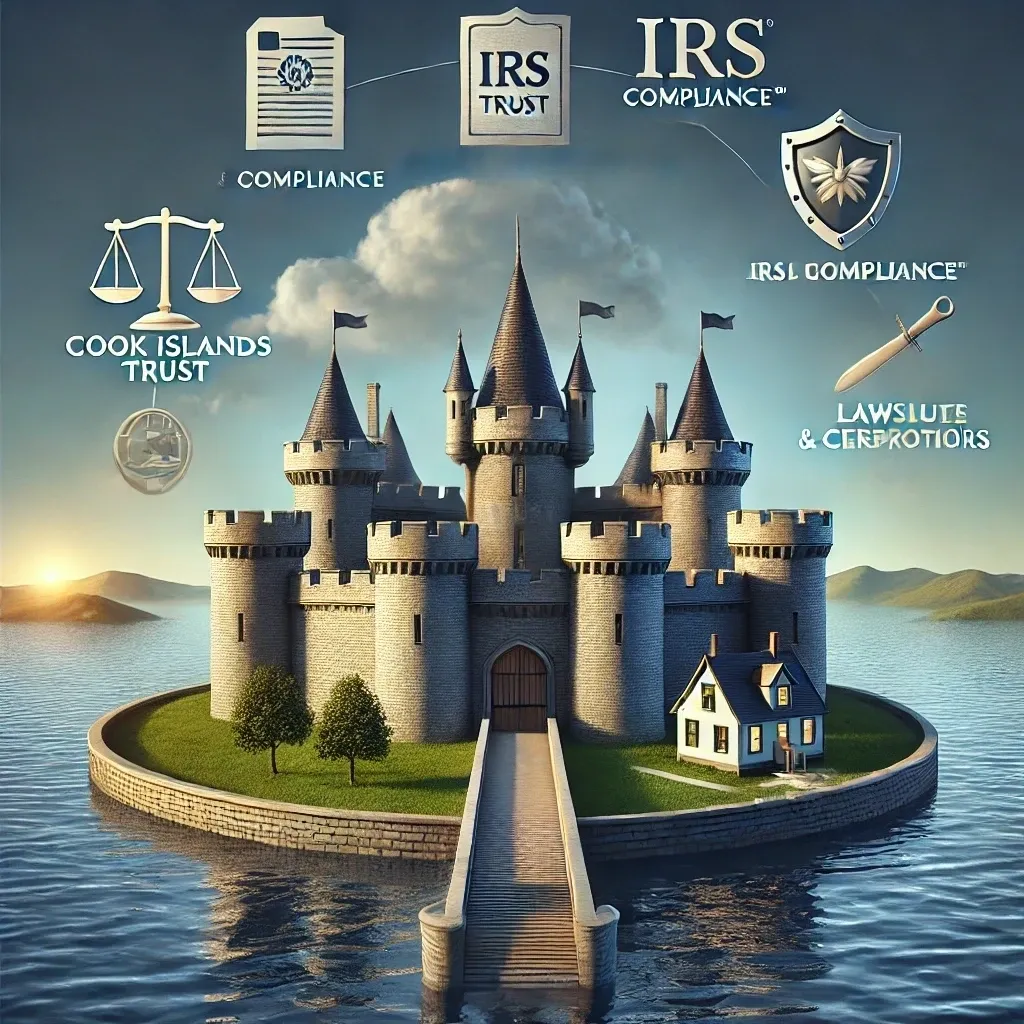
Imagine your wealth as a castle—carefully built over the years through sacrifice and hard work. To protect it, you need more than just walls. You need a fortress with thick defenses, a secure moat, and trusted guards.
A Cook Island Trust is the most powerful legal fortress you can build to protect your assets. Its protections are so strong that even government agencies and aggressive creditors struggle to breach it. But here’s the truth: for most people, a Cook Islands Trust is overkill.
While it’s one of the best tools for safeguarding your financial future, it’s also costly to set up, expensive to maintain, and comes with significant IRS reporting obligations. That’s why, at our firm, we often recommend a Bridge Trust®—a hybrid solution that starts as a fully registered offshore trust in the Cook Islands but is “bridged” back to the U.S. for simplicity. If a threat arises, the “bridge” can be broken, activating its full offshore protection.
In this article, we’ll explain:
• What is a Cook Islands Trust?
• Why the Cook Islands Trust is so strong and effective.
• How the Bridge Trust® combines domestic simplicity with offshore strength.
What Is a Cook Islands Trust?
A Cook Islands Trust is an offshore asset protection trust established under the laws of the Cook Islands, a jurisdiction known for having the strongest asset protection laws in the world. Created by the International Trusts Act of 1984, the Cook Islands Trust was designed to protect individuals and families from lawsuits, creditors, and other financial threats.
Unlike domestic trusts, which are subject to U.S. court rulings, the Cook Islands Trust exists in a foreign legal jurisdiction that does not recognize foreign court judgments. This means that even if a U.S. court issues a judgment against you, creditors must re-litigate the case in the Cook Islands to attempt to access the assets.
Why Is the Cook Islands Trust So Powerful?
A Cook Islands Trust is often regarded as the “gold standard” of asset protection. Here’s why:
1. Foreign Jurisdiction with Creditor-Unfriendly Laws
The Cook Islands Trust is governed by laws that make it nearly impossible for creditors to seize assets held within the trust.
• No Recognition of Foreign Judgments: The Cook Islands does not enforce U.S. court orders or judgments.
• High Burden of Proof: Plaintiffs must prove their case “beyond a reasonable doubt,” the same standard used in criminal trials—not civil cases.
• Cost-Prohibitive Litigation: Creditors must file their claims in the Cook Islands and hire local attorneys, making the process extremely costly.
2. Mandatory Bond for Lawsuits
Creditors must post a significant bond to file a lawsuit in the Cook Islands. If they lose, they forfeit the bond and may be responsible for the defendant’s legal fees. This upfront cost often deters creditors from pursuing frivolous claims.
3. Trustee Independence
In a Cook Islands Trust, legal control of the assets is held by a licensed, independent trustee located in the Cook Islands.
• This trustee is bound by the trust agreement and must follow strict legal guidelines.
• You appoint a trust protector—a trusted individual who can replace the trustee if necessary.
By transferring control to an independent trustee, you create a legal barrier that prevents courts from compelling you to repatriate assets. This was demonstrated in several key cases:
• Anderson v. Commissioner of Internal Revenue (1998): The IRS could not force the Andersons to bring back assets from their Cook Islands Trust because the trustee, not the Andersons, held legal control.
Click this Link for a case summery of the Anderson case:
• United States v. Grant (2008): The court ruled that Grant could not repatriate assets held offshore because they were legally controlled by the trustee.
LINK TO CASE DOCKET: https://www.leagle.com/decision/In%20FDCO%2020130422H56
Click this LINK to a case summary of US vs Grant:
How Cook Islands Trusts Are Used
Cook Islands Trusts are used by a wide range of individuals, including:
• Business owners: To protect personal wealth from potential lawsuits.
• Doctors and medical professionals: To shield assets from malpractice claims.
• Real estate investors: To safeguard properties and rental income.
• Families: To protect multi-generational wealth from creditors and probate courts.
A Cook Islands Trust can hold both tangible and intangible assets, such as:
• Tangible assets: Real estate, vehicles, artwork, collectibles.
• Intangible assets: Bank accounts, stocks, cryptocurrency, intellectual property.
Additionally, thanks to the Cook Islands International Relationship Property Trust Act, these trusts can protect assets from being divided during divorce proceedings.
The Downsides of a Cook Islands Trust
While the Cook Islands Trust is an incredibly powerful tool, it comes with some challenges:
1. High Setup and Maintenance Costs:
Setting up a Cook Islands Trust typically costs tens of thousands of dollars, with ongoing fees for trustee services and legal compliance.
2. Complex IRS Reporting Requirements:
Offshore trusts require detailed annual disclosures to the IRS and FinCEN, including Forms 3520 and 3520-A. Failure to comply can result in severe penalties.
3. Perceived Loss of Control:
Since the trustee holds legal title to the trust’s assets, you must give up direct control. However, the trust protector provides a safeguard by ensuring you can replace the trustee if needed.
The Bridge Trust®: Offshore Power with Domestic Simplicity
For clients who don’t need the full power of a Cook Islands Trust right away—or who want to avoid the complexity and cost—we recommend the Bridge Trust®. This unique structure combines the strength of an offshore trust with the convenience of a domestic trust.
How the Bridge Trust® Works:
1. Fully Offshore from Day One:
The Bridge Trust® is legally registered as an offshore Cook Islands Trust from the start.
2. Bridged Domestically for Tax Simplicity:
For tax purposes, the trust is treated as a domestic grantor trust, eliminating the need for immediate offshore IRS reporting.
3. Break the Bridge When Threatened:
If a legal threat arises, the “bridge” is broken, and the trust automatically reverts to its full offshore status, gaining the same protections as a standalone Cook Islands Trust.
Key Benefits of the Bridge Trust®:
• Cost-Effective: Lower upfront costs compared to a full offshore trust.
• Simplified Reporting: No offshore IRS filings required unless the bridge is broken.
• Full Control: You retain domestic control of your assets while the bridge is intact.
• Adaptable: Instantly shifts to offshore protection when needed.
A Real-Life Example of the Bridge Trust® in Action
Let’s say you’re a real estate investor who has built a significant portfolio. One day, you’re hit with a large lawsuit after a tenant suffers an injury on your property. Since your assets are held in a Bridge Trust®, you’ve enjoyed simple domestic reporting until now.
When the lawsuit becomes a real threat, your legal team breaks the bridge, shifting the trust to full offshore protection. Your assets are now legally outside U.S. jurisdiction, and your creditor would need to re-litigate in the Cook Islands—a nearly impossible task.
Conclusion: Build the Right Fortress for Your Needs
A Cook Islands Trust is not a scam—it’s a proven, time-tested tool for asset protection. However, for most people, starting with a standalone offshore trust is unnecessary.
The Bridge Trust® provides the best of both worlds: domestic simplicity during calm times and offshore strength when it matters most. It’s like a drawbridge that protects your castle by raising defenses only when necessary.
📲 Contact us today at (888) 773-9399 to talk with an asset protection lawyer and learn how we can create a personalized asset protection strategy that fits your life, your goals, and your legacy.
By: Brian T. Bradley, Esq.