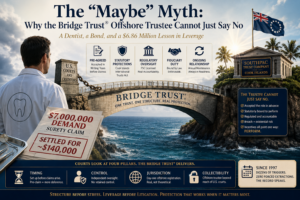
The “Maybe” Myth: Why the Bridge Trust® Offshore Trustee Cannot “Just Say No”

The biggest criticism of the Bridge Trust® is that the offshore trustee can simply “say no” during duress. That critique misunderstands how the structure actually works. This article explains why the Special Successor Trustee’s commitment is made at formation — not at trigger — and why the same “maybe” argument applies equally to fully foreign Cook Islands trusts. Includes real-world case analysis, trustee mechanics, Cook Islands law, and the four pillars courts actually evaluate: timing, control, jurisdiction, and collectibility.

Continue ReadingThe “Maybe” Myth: Why the Bridge Trust® Offshore Trustee Cannot “Just Say No”

THREE PROBLEMS. ONE STRUCTURE. MOST ADVISORS ARE ONLY SOLVING ONE.

Your client has a plan for what happens when they die. They may not have a plan for what happens when they get sued while they’re still alive — or what happens to the $89 million that gets extracted from their estate across the next two generations. This article is written for the insurance producer who already sits across from that client.

Continue ReadingTHREE PROBLEMS. ONE STRUCTURE. MOST ADVISORS ARE ONLY SOLVING ONE.

Does Your Offshore Trust Actually “Activate” When You Need It? What the Critics Get Wrong — and What Your Instrument Should Say

Most offshore trusts don’t activate when you actually need them. Here’s what the activation mechanism should say in your governing instrument — and where critics of hybrid structures get the analysis wrong

Continue ReadingDoes Your Offshore Trust Actually “Activate” When You Need It? What the Critics Get Wrong — and What Your Instrument Should Say