Bradley Legal Corp · Foreign planning
Foreign Asset Protection Trusts
The strongest legal separation available, with offshore administration and annual reporting that come with it. A decision that deserves the complete picture.
Request a legal consultationCompare your options →What a foreign asset protection trust is
A foreign asset protection trust (FAPT) places assets under a sovereign legal system that does not recognize U.S. judgments.
A domestic trust relies on one state’s statute that another state’s court can decline to apply. A foreign trust changes the forum itself. A creditor who wins a U.S. judgment has to start over, in a foreign court, under foreign law, against a foreign trustee.
There is little serious debate that a properly established FAPT can provide strong legal protection when it is implemented before creditor problems arise and maintained correctly.
Where the protection comes from
The most developed framework is the Cook Islands International Trusts Act 1984, as amended. Nevis and Belize offer co-equal creditor-protective regimes. The core protections:
- Non-recognition of foreign judgments. A U.S. judgment cannot be domesticated. The claim must be re-litigated locally from the beginning.
- A criminal-level burden of proof. Fraudulent transfer must be established beyond a reasonable doubt.
- Short, hard limitation periods.
- A creditor bond in Nevis. A creditor must deposit EC$270,000 (about US$100,000) with the Nevis Ministry of Finance before suing trust property. The Cook Islands has no equivalent mandatory bond. It builds its barriers differently, through non-recognition, the burden of proof, strict limitation periods, and costs-shifting against a claimant who loses. In my view, that is different architecture, not different strength.
- Regulated trustees. A licensed offshore trustee answers to its local legal framework. Complying with an order from a foreign court that has no local jurisdiction exposes that trustee to personal liability and loss of license.
The structure at a glance
Three parts that work together.
What the case law actually shows
U.S. courts can compel people within their jurisdiction. They cannot compel an independent foreign trustee. Civil contempt requires a present ability to comply: Maggio v. Zeitz, 333 U.S. 56 (1948). But courts treat self-created impossibility skeptically, and the defense usually loses where the settlor kept any key to the structure.
In the reported cases I rely on, the adverse results turned on retained control, reactive timing, or where the assets or the settlor sat:
- FTC v. Affordable Media (the Anderson case), 179 F.3d 1228 (9th Cir. 1999). The Cook Islands trustee refused repatriation twice. The Andersons were held in contempt because they kept their positions as trust protectors, so they could not establish that compliance was impossible. The lesson is separation of roles.
- In re Rensin, 600 B.R. 870 (Bankr. S.D. Fla. 2019). Florida law applied despite the Belize choice-of-law clause, and distributions to the settlor-beneficiary were reachable. The court could not compel the offshore trustee to turn over assets held beyond U.S. jurisdiction.
- Riechers v. Riechers, 679 N.Y.S.2d 233 (N.Y. Sup. Ct. 1998). A physician’s Cook Islands trust, formed years earlier for general malpractice exposure, was not set aside. The divorce court still made an award against the husband personally.
I walk through each of these cases, and the domestic-trust cases they are usually compared against, in my offshore asset protection trust guide.
What it costs to maintain
The strength is real, and so is the cost. It is administrative, and it never stops: professional offshore trustees, international banking, annual trustee fees, and counsel, accountants, and custodians across multiple jurisdictions.
The reporting regime is the part most people underestimate. A foreign trust with a U.S. owner triggers reporting under IRC §6048: Form 3520 on creation and on every reportable transfer or distribution, and Form 3520-A every year. These are information returns. They generally produce no tax.
The penalties under IRC §6677 are not tied to tax owed. For a missed or incomplete transfer or distribution, the penalty is the greater of $10,000 or 35% of the amount involved. For a missed Form 3520-A, it is the greater of $10,000 or 5% of the trust assets treated as owned by the U.S. person. Timely filing is not a safe harbor: incomplete or incorrectly valued returns are penalized too.
Preparation by experienced preparers commonly runs several thousand dollars a year on top of trustee and legal fees.
For what a Cook Islands trust specifically costs, and when it is more structure than your risk requires, see Cook Islands trust: how it works, what it costs, and when you don’t need one.
Who a foreign trust fits
A fully foreign trust may be right for:
- Families with substantial international holdings
- Entrepreneurs whose exposure is significant and immediate
- Clients already maintaining offshore banking relationships
- Clients whose broader planning already requires international reporting
The honest question is not only whether it would provide stronger protection in a lawsuit. It is whether the actual risk justifies accepting the reporting regime every year from now on. The lawsuit may never happen. The compliance obligation will.
How to vet an offshore trustee
A foreign trust is only as offshore as the people who control the trustee. Ask three questions:
- Who owns the trustee? If the person recommending the trust also owns the trustee company, you do not have an independent trustee.
- Where do the people who control it live, and whose courts can reach them? A U.S.-based owner puts a domestic door in the offshore wall.
- Is it a licensed, regulated trust company with a real track record? A license is the minimum threshold, not the test.
How a foreign trust compares with a hybrid
A hybrid, such as the Bridge Trust®, is classified as domestic for tax purposes while no threat exists, so the foreign reporting regime generally does not apply during that phase. That is deferral, not elimination: if the trust transitions offshore, the full reporting regime applies from that point. The trade is offshore filing burden versus domestic simplicity. For a full side-by-side comparison, see Asset Protection Trusts: Domestic, Foreign, and Hybrid Compared.

For how the hybrid is built and classified, see What Is the Bridge Trust®?
Frequently asked questions
Are foreign asset protection trusts legal for U.S. citizens?
Yes, when funded before a claim is foreseeable and fully reported. They do not reduce U.S. tax and do not exempt anyone from disclosure.
Can a U.S. court force my offshore trustee to return assets?
It can order a person within its jurisdiction to act. It has no mechanism to compel a foreign fiduciary in a jurisdiction that does not recognize U.S. judgments. That is why the settlor must not keep control.
Does a foreign trust protect U.S. real estate?
Not by holding it. Land is governed by the law where it sits. Real estate belongs in a state-matched LLC inside the ownership chain.
Which is better, the Cook Islands or Nevis?
Nevis requires a creditor bond; the Cook Islands builds its barriers differently. In my view, neither is simply stronger. The right jurisdiction depends on your facts.
What if I have already been sued?
For that claim, the window has largely closed, and a transfer now is exposed to being unwound as a voidable transfer. Creditors can reach back four years under the Uniform Voidable Transactions Act in most states, and ten years under 11 U.S.C. §548(e) for transfers to a self-settled trust in bankruptcy.
About your attorney
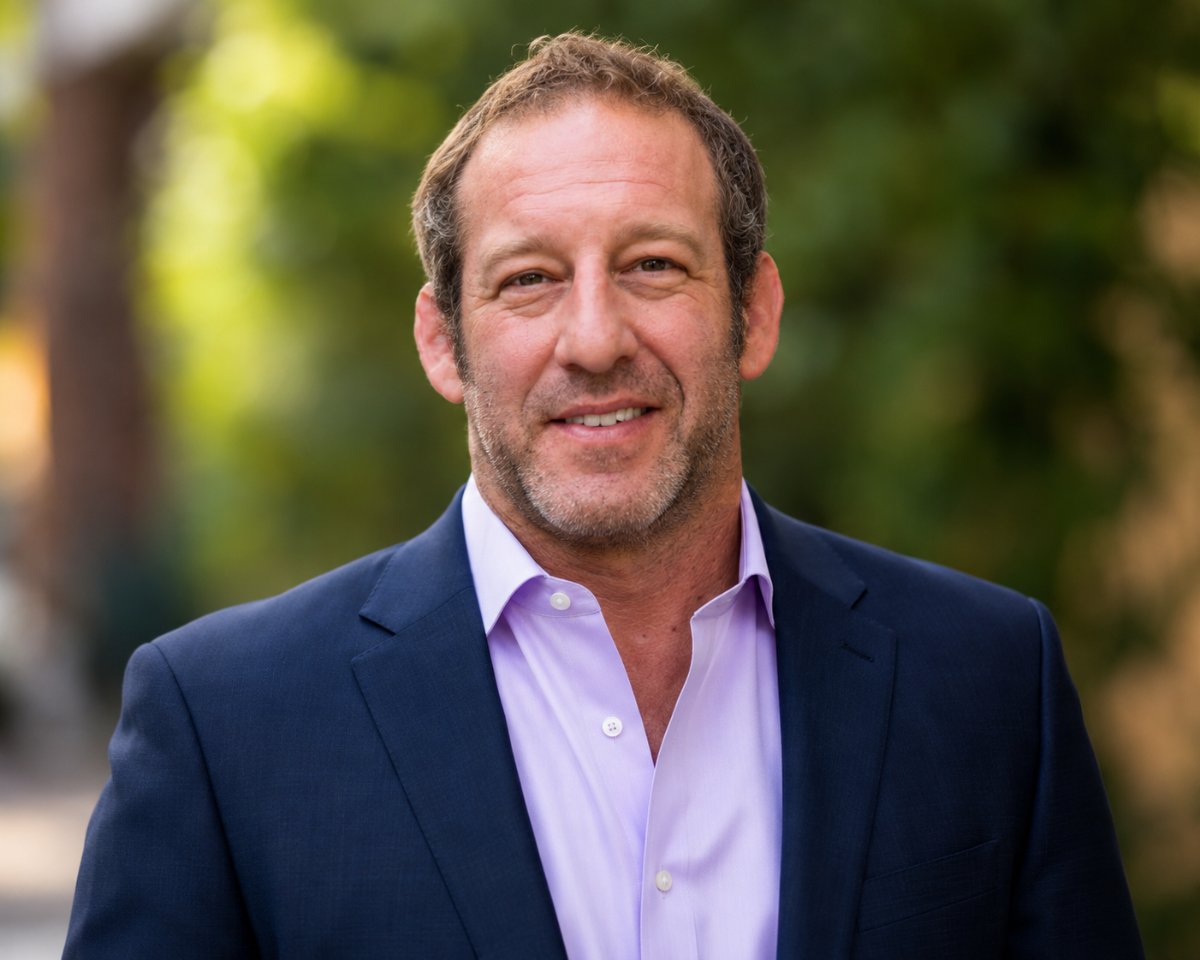
Brian T. Bradley, Esq.
Licensed in California, Oregon & Washington
I spent the early part of my career on the plaintiff’s side of civil litigation in Los Angeles and Orange County, running discovery and taking structures apart. I now use that experience on the other side of the table: designing structures before a claim exists, so they hold when a creditor’s attorney tests them.
I handle trust engagements as co-counsel with the Trust Protector, an affiliated firm that prepares the trust documents, and I am directly involved in every engagement from design through implementation. I am the author of the Over Exposed series.
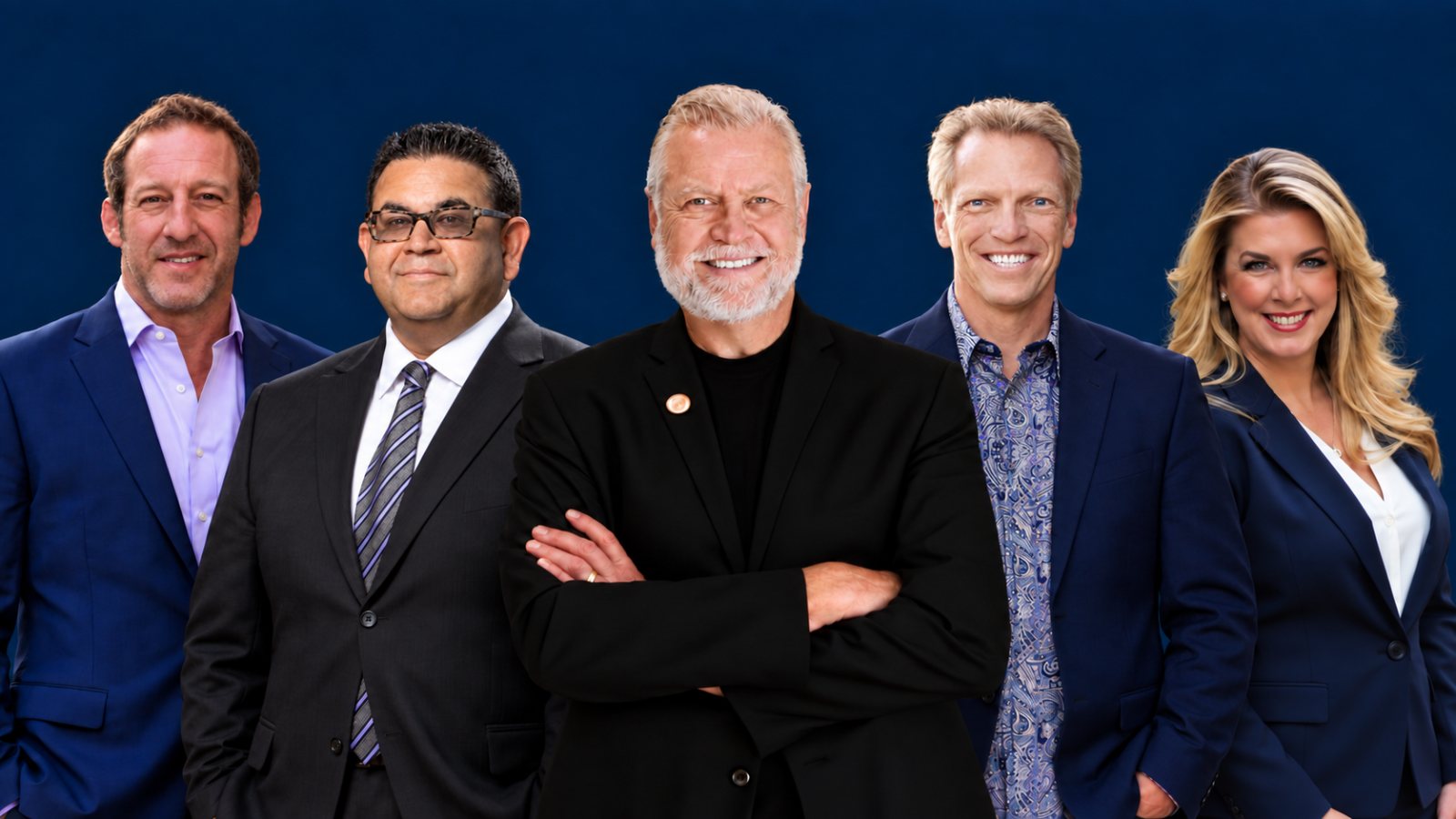

Asset Protection Council
A national network of legal, tax, and financial professionals. I serve as the Council’s lead attorney.
Structure before stress.
Is a foreign trust right for you?
The answer turns on your exposure, your assets, and whether you will maintain the structure for the next twenty years. That is the conversation to have first.
Request a legal consultation(888) 773-9399
Attorney advertising. Brian T. Bradley, Esq., Bradley Legal Corp, Wilsonville, Oregon. Licensed in California, Oregon, and Washington, and serving clients nationwide; matters under other states’ law are handled with local counsel where required. This page is general information, is not legal or tax advice, and does not create an attorney-client relationship. Outcomes depend on facts, timing, and jurisdiction.
Disclosure: I handle every trust engagement as co-counsel with the Trust Protector, an affiliated firm that prepares the trust documents and serves as protector on the Bridge Trust® and Dynasty Bridge Trust®. I am directly involved in each engagement, from design through implementation. The legal fee is divided between the two firms, as set out in the engagement letter, and I am paid for that work. I work with multiple independent, licensed trustees and do not own a trustee company, and I will not serve as anyone’s offshore trustee myself.