
Bradley Legal Corp · California planning
California Asset Protection Attorney
If you live in California, the trust or LLC you were sold may not hold up when a creditor comes. Most structures marketed to California residents fail under enforcement. I design the ones built to hold — before a claim exists.
Request a legal consultationHow it works →60-minute legal consultation · straight to my calendar · I will tell you if it is not a fit
The short answer
Revocable trusts, self-settled trusts, out-of-state DAPTs and single-member LLCs all fail under California enforcement. Protection in California comes from layered separation built before any claim exists: state-matched LLCs, an Arizona limited partnership, and the Bridge Trust®.
Who I work with
Clients typically have $1M or more in exposed assets that have not yet been structured correctly.
The legal consultation is a two-way evaluation. If the Bridge Trust® is not appropriate for your situation, I will tell you directly and point you toward the correct structure.
Why California structures fail
California has no Domestic Asset Protection Trust statute, and its courts are not obligated to honor another state’s.
Under Probate Code §18200, assets in a revocable trust are reachable by your creditors while you are alive. It is an estate planning tool, not protection.
Read more →Under Probate Code §15304(a), a spendthrift clause in a trust you create for yourself is unenforceable against your own creditors.
Do asset protection trusts work in California? →In United States v. Huckaby, No. 2:23-cv-00587-DAD-JDP (E.D. Cal. Mar. 2, 2026), California law governed California real property despite a Nevada choice-of-law clause. The lien attached.
Read more →Corporations Code §17705.03 allows a charging order, with receivership and foreclosure of the interest, and Curci Investments, LLC v. Baldwin, 14 Cal. App. 5th 214 (2017), permitted reverse veil piercing.
Read more →Under the Uniform Voidable Transactions Act, transfers made once a claim is foreseeable can be reversed. Structure built after the threat is not protection. It is evidence.
Read more →Other courts have reached the same place by different routes: In re Huber, 493 B.R. 798 (Bankr. W.D. Wash. 2013), applied Washington law instead of the Alaska law the trust designated, and Dahl v. Dahl, 2015 UT 23, refused to enforce a Nevada choice-of-law clause. Courts do not analyze paperwork. They analyze control.
The full analysis is in How to Protect Assets From a Lawsuit in California: What Actually Works.
What works in California
Protection in California comes from layered separation built before any claim exists. No single tool does it.
Each property or business sits in its own state-matched LLC, so a claim against one does not automatically expose the others.
Holds the LLC interests. Under A.R.S. §29-341 the charging order is the exclusive remedy, and it produces no distributions unless the partnership makes them.
Holds the partnership interest and supplies the jurisdictional anchor.
See California registration requirements for Arizona limited partnerships.
The Bridge Trust®
A structure that stays inside California’s enforcement system — regardless of how it is labeled — remains fully reachable. The Bridge Trust® answers with jurisdiction rather than a sister-state statute.
The Bridge Trust® at a glance
One trust, two legal identities.
It is classified as domestic for U.S. tax purposes under the court and control tests of Treas. Reg. §301.7701-7, with a licensed offshore trustee engaged from day one as Special Successor Trustee. In that posture there is no separate foreign reporting burden and no change to how your CPA files.
If a genuine creditor threat arises, the Trust Protector — an independent attorney exercising professional judgment — may declare an Event of Duress, and control shifts to the Special Successor Trustee under the pre-existing terms of the instrument. That shift is not automatic. It is deliberate, documented, and supervised by counsel and the Trust Protector. It is not a transfer of assets; what changes is who controls the trust, and where.
That is where collectibility changes. The Cook Islands framework does not recognize U.S. judgments, requires the creditor to prove fraudulent intent beyond a reasonable doubt, imposes short limitation periods that begin when the trust is funded, and shifts costs against a losing claimant. Nevis, the other successor jurisdiction, also requires a creditor to post a statutory bond before suit.
No structure makes anyone judgment-proof, and no lawyer can promise a courtroom outcome. What a properly built and properly timed structure changes is what a creditor can reach and what it costs to try. The case law shows both sides:
- FTC v. Affordable Media, LLC, 179 F.3d 1228 (9th Cir. 1999). The Cook Islands trustee refused the repatriation order and the money never came back. When the FTC pursued the trust in the Cook Islands, the High Court rejected its attempt on every point on August 10, 1999 and awarded costs against it. The Andersons were still jailed for civil contempt, and the reason is the lesson: they served as co-trustees and as protectors of their own trust, holding the power to certify that no event of duress existed. Separation of roles is the point — not that offshore jurisdiction is magic, or that it is worthless.
- SEC v. Solow, 682 F. Supp. 2d 1312 (S.D. Fla. 2010). Contempt upheld based entirely on post-judgment transfers and continued personal use of trust assets. The case turned on bad timing and bad conduct — not on any defect in the offshore structure itself.
- Riechers v. Riechers, 178 Misc. 2d 170 (Sup. Ct. Westchester Cty. 1998), aff’d 267 A.D.2d 445. The court lacked jurisdiction over the Cook Islands trust corpus, but it had jurisdiction over the husband, and the wife was awarded $2,000,000 plus a $3,052,853.20 judgment. Asset protection does not defeat family obligations.
This is pre-litigation planning. If a lawsuit is already filed, the window has likely closed.
Track record
This is platform history, not a prediction of future results.
What clients and colleagues say
“Brian has provided me with a wealth of knowledge regarding asset protection and advanced planning. He knows where to weaken plans from an attacking creditor side which means he knows where to strengthen the plans form the proactive planning side.”Mark Seither, Partner and Wealth Manager at Kingsview Partners
“Brian has been a proven resource and wealth of knowledge for me and my clients in the asset protection space. I always appreciate Brian’s ability to explain complex legal topics in a manner that anybody can understand. He also understands taxation and tax strategy, which for me as a CPA, makes working with him a pleasure.”Jordan Steichen, CPA, ABV
“Brian has a very unique skill set in the world of law, especially when it comes to business planning, estate planing and asset protection. He is relentless in his pursuit of finding powerful and custom tailored solutions for each client he serves. It has been great to work with Brian on many mutual clients.”Jared Siddle, Risk Director / CCO at Protect
“I do not recommend many people, so when I do, it is for a reason…Brian is a well established lawyer and more than capable of handling complex transactions and asset protection scenarios. Furthermore, I have always known him to be fraught with integrity and sincerity.”Nima Rezaei, CPA, MBA
“Brian is one of the top experts on asset protection and how to protect your hard-earned wealth. His multilayered protection strategy is the most advanced I’ve seen … he is humble and truly passionate about sharing his strategies to help others.”Kent Ritter, CEO Hudson Investing
“Brian is an excellent attorney. He knows this stuff like the back of his hand.…” Read full review →Anonymous, 30/8/2024
Frequently asked questions
What does a California asset protection attorney do?
I design pre-litigation structures — LLCs, limited partnerships, and trusts — so that a creditor who wins a judgment against you faces a harder, more expensive collection problem. The work has to happen before a claim exists; once a claim is foreseeable, the planning window has largely closed.
Do Nevada asset protection trusts work for California residents?
Usually not effectively. Where the settlor lives in California or the asset is California real property, California law generally governs the creditor question regardless of the trust’s chosen state, as Huckaby applied in 2026. Do Nevada asset protection trusts actually work? →
How strong is the Bridge Trust® in a California lawsuit?
It does not depend on California treating it as something it is not. California voids self-settled spendthrift protection under Probate Code §15304, and Huckaby applied California law to California real property despite a Nevada choice-of-law clause. The Bridge Trust® answers with jurisdiction rather than a sister-state statute: it owns the limited-partnership interest, not the real estate, and a licensed trust company in the Cook Islands or Nevis is pre-committed as Special Successor Trustee. If a genuine creditor threat arises, the Trust Protector — not you — may declare an Event of Duress. No structure makes anyone judgment-proof, and it only works if it is built before a claim exists. What it changes is what a creditor can reach and what it costs to try.
Does the Bridge Trust® try to get around Probate Code §15304?
No. The Bridge Trust® is self-settled from the outset, and it says so. Its protection does not depend on California treating it as something it is not. It depends on where the assets can be held, who controls them, and when and why the structure was built.
What assets are already protected in a California lawsuit?
Some assets are exempt by statute before any structure is built. ERISA-governed plans such as a 401(k) carry strong anti-alienation protection, subject to exceptions such as qualified domestic relations orders and federal tax claims. California’s CCP §704.115 protects private retirement plans, but IRAs and self-employed plans are protected only to the extent a court finds them reasonably necessary for support. California’s homestead exemption is indexed and covers a real but limited amount of equity; equity above it is exposed.
Can I still protect assets after I have been sued?
Usually not against that claim. Transfers made once a claim is foreseeable can be reversed under the California Uniform Voidable Transactions Act, and protection built after a claim is on the horizon is evidence against you. I work with clients who are still inside the planning window. Is it too late to protect your assets? →
What does asset protection cost?
The price depends on the plan. Starting prices are Domestic from $8,000, Bridge Trust® from $35,000, and Foreign from $40,000. My standard fee for the 60-minute legal consultation is $275; for now, I am offering it at no charge. What asset protection costs →
Does it change how I file taxes?
No. The Bridge Trust® is classified as domestic for U.S. tax purposes and is a grantor trust under IRC §§671–677, so income is reported on your own return. There is no separate foreign reporting burden while it operates domestically.
What happens in the legal consultation?
It is a two-way evaluation of your assets, your risks, your timing, and any existing documents. If the Bridge Trust® is not appropriate for your situation, I will tell you directly and point you toward the correct structure. Submitting the form or booking a consultation does not create an attorney-client relationship.
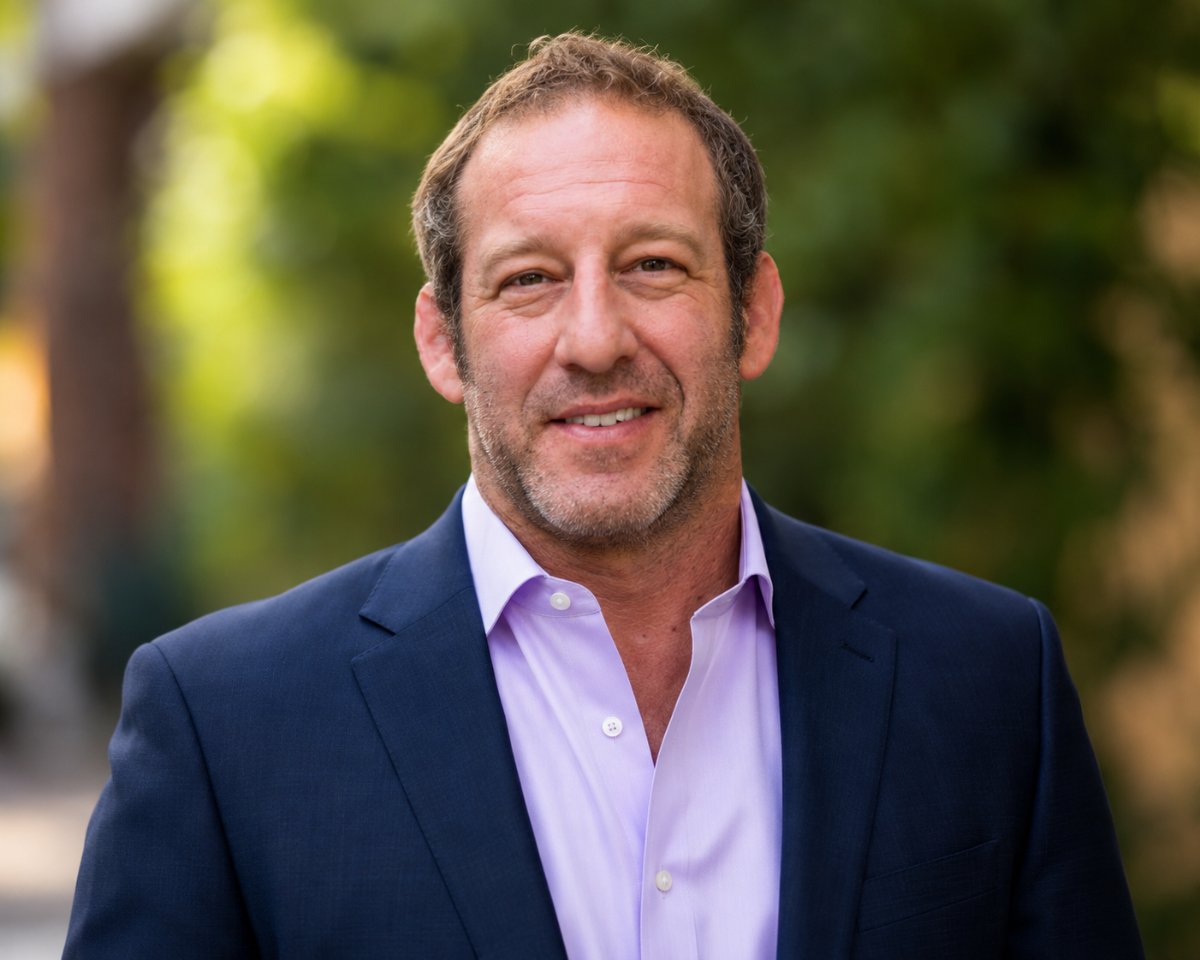
About your attorney
Brian T. Bradley, Esq.
Licensed in California, Oregon & Washington
I spent the early part of my career on the plaintiff’s side of civil litigation in Los Angeles and Orange County, running discovery and taking structures apart. The ones that came apart in my hands failed for the same reasons: the debtor still controlled what he claimed to have given away, the real estate sat exposed, and the whole thing leaned on another state’s statute that California was free to ignore.
I now use that experience on the other side of the table: designing structures before a claim exists, so they hold when a creditor’s attorney tests them. I handle trust engagements as co-counsel with the Trust Protector, an affiliated firm that prepares the trust documents, and I am directly involved in every engagement from design through implementation.
Structure before stress.
Still inside the planning window?
You don’t rise to the level of your income. You fall to the level of your legal structure. Start with a 60-minute legal consultation — it goes straight to my calendar, and I will tell you if your matter is not a fit.
Request a legal consultation(888) 773-9399
Attorney advertising. Brian T. Bradley, Esq., Bradley Legal Corp, Wilsonville, Oregon. Licensed in California, Oregon, and Washington. This page is general information, is not legal or tax advice, and does not create an attorney-client relationship. Outcomes depend on facts, timing, and jurisdiction. Testimonials reflect individual opinions and are not a guarantee, warranty, or prediction of the outcome of any matter.
Disclosure: I handle every trust engagement as co-counsel with the Trust Protector, an affiliated firm that prepares the trust documents and serves as protector on the Bridge Trust® and Dynasty Bridge Trust®. I am directly involved in each engagement, from design through implementation. The legal fee is divided between the two firms, as set out in the engagement letter, and I am paid for that work. I work with multiple independent, licensed trustees and do not own a trustee company, and I will not serve as anyone’s offshore trustee myself.