

I spent years on the other side of this.
Before I built an asset protection practice, I was a plaintiff civil litigator in Los Angeles and Orange County. My job was to find your money. I used discovery to pull financial records, trace ownership structures, identify nominees, and expose every asset a defendant thought was hidden or protected. I know what a motivated creditor’s attorney looks for — because I was one.
That background is why I do this work the way I do it. Asset protection is not a sales pitch. It is a legal discipline built on enforcement reality — on understanding exactly how a judgment creditor, a bankruptcy trustee, or a plaintiff’s attorney approaches collection, and then building a legal structure that changes the outcome of that analysis before the threat ever materializes.
This article explains what asset protection is, how it works mechanically, what it is not, and what the goal actually is when it’s done correctly.
What Asset Protection Is
Asset protection is the pre-litigation process of restructuring legal ownership and control of assets so that a future creditor — a judgment holder, a plaintiff, a trustee in bankruptcy — faces structural, jurisdictional, and practical barriers to collection that make enforcement difficult, expensive, or impossible.
The operative word is pre-litigation. Asset protection is not something you build after a lawsuit is filed. It is not something you build after a judgment is entered. It is something you build during a period of financial stability, when no specific threat exists, because the law requires it to be done at that point to be valid.
The legal framework governing this timing requirement is the Uniform Voidable Transactions Act — adopted in California as Cal. Civ. Code §§ 3439 et seq., in Oregon as ORS §§ 95.200 et seq., and in Washington as RCW §§ 19.40 et seq. Under the UVTA, a transfer made with actual intent to hinder, delay, or defraud a creditor is voidable — meaning a court can unwind it and return the asset to the creditor’s reach. Transfers made to an insider while insolvent are presumptively fraudulent. The window a creditor has to challenge a transfer varies by state and by type of claim, but the principle is universal: structure built in anticipation of a known threat is vulnerable. Structure built before any threat exists is defensible.
This is why timing is not a technicality. It is the first pillar of every sound asset protection plan.
What Asset Protection Is Not
This distinction matters because the market is full of confusion about it.
Asset protection is not hiding assets. Hiding assets from a court is contempt of court and, in certain contexts, a federal crime. A properly structured asset protection plan is fully disclosed — it is reported to the IRS where required, it is acknowledged in deposition if asked, and it is never built on concealment. The protection comes from legal structure, not secrecy.
Asset protection is not insurance. Insurance is a risk transfer mechanism — it pays a claim after a loss event. Asset protection is a pre-loss legal structure that changes whether a loss event reaches your personal balance sheet in the first place. The two are complementary, but they are not substitutes. A physician with a $2 million malpractice policy and no asset protection structure is fully exposed on every dollar above the policy limit — and in a world where nuclear verdicts routinely exceed eight figures, that exposure is real.
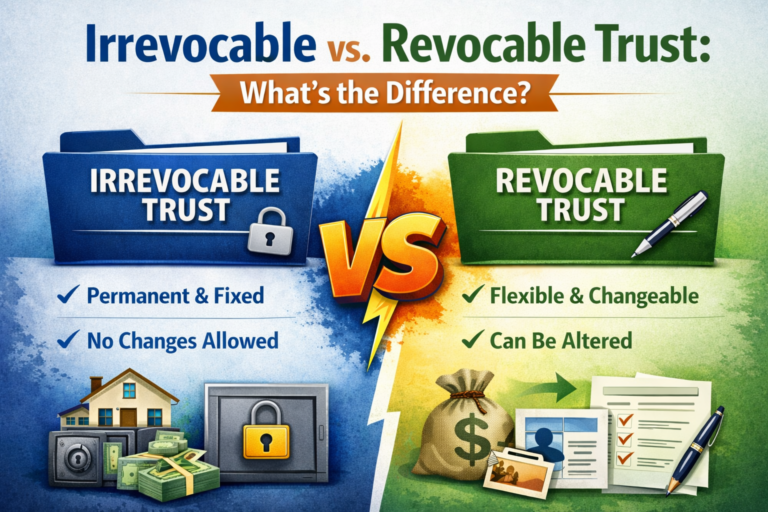
Asset protection is not estate planning. A revocable living trust avoids probate. A will controls distribution at death. Neither instrument protects anything from a creditor during your lifetime — because both leave you in control of the assets, and control is the variable that determines collectibility. Asset protection and estate planning solve different problems across different timelines, and the clients who are most exposed are the ones who completed one and believe they’ve done both.
Asset protection is not fraud. A fraudulent transfer requires specific intent — actual intent to hinder, delay, or defraud a specific creditor — or constructive fraud based on insolvency at the time of transfer. Lawful asset protection planning, done before any specific threat exists and for sufficient consideration or legitimate purpose, falls entirely outside that definition. Courts have repeatedly upheld properly structured asset protection plans as legitimate. Riechers v. Riechers, 679 N.Y.S.2d 233 (Sup. Ct. Westchester Cty. 1998), is one of the clearest examples — a New York court examining a Cook Islands trust concluded explicitly that it had been established “for the legitimate purpose of protecting family assets.”
How Asset Protection Works Mechanically
The mechanics of asset protection come down to four variables. I call them the four pillars: Timing, Control, Jurisdiction, and Collectibility.
Timing governs everything else. The earlier a structure is built, the more defensible it is. A transfer made two years before a lawsuit cannot be a fraudulent transfer to a known creditor — the creditor didn’t exist yet. A transfer made two days after a demand letter almost certainly can be. The fraudulent transfer look-back periods under the UVTA — generally four years for constructive fraud, with a separate discovery rule — define the window of vulnerability. Building outside that window is the goal.
Control determines whether a creditor can reach the asset. Under both common law and the Restatement (Third) of Trusts, a creditor steps into the debtor’s shoes. Whatever rights you have over an asset, a creditor can exercise. If you can revoke a trust and take the assets back, a court can order you to do exactly that. The legal transfer of control — to an independent trustee, to an LLC manager operating under a charging-order-exclusive statute, to a foreign trustee operating outside U.S. jurisdiction — is what removes the creditor’s ability to compel the asset’s return.
Jurisdiction determines which court’s orders apply and whether they can be enforced. A judgment from a California court is enforceable in California. It is not automatically enforceable in the Cook Islands, which does not recognize foreign judgments and requires a creditor to relitigate the claim under local law — with a two-year statute of limitations, a beyond-a-reasonable-doubt evidentiary standard, and a required bond simply to file. The jurisdictional gap between where the creditor obtained their judgment and where the assets are held is the structural moat.
Collectibility is the practical outcome of the first three variables. A creditor with a valid judgment and a compliant debtor collects. A creditor with a valid judgment, an independent foreign trustee, assets in a jurisdiction that refuses to recognize the judgment, and a two-year limitations period that has already run — that creditor settles for cents on the dollar or walks away. The goal of asset protection is not to defeat a judgment. It is to make enforcement so costly, procedurally burdensome, and practically improbable that the rational economic decision for the creditor is to negotiate or abandon the claim.
This is why asset protection works: it changes the plaintiff attorney’s contingency fee calculation before they ever file suit.
The Structural Hierarchy
A properly layered asset protection plan builds outward from the asset through increasing levels of legal insulation.
The foundation is the business entity layer — typically one or more limited liability companies structured under charging-order-exclusive statutes in jurisdictions like Nevada, Wyoming, or Arizona. A charging order is the exclusive remedy a creditor has against an LLC member’s interest in those states, confirmed in Arizona by NextGear Capital v. Owens (Ariz. 2023). It entitles the creditor to receive distributions if and when the LLC makes them — but it gives the creditor no right to the underlying asset, no right to force a sale, and no right to step into management. A creditor holding only a charging order against a properly managed LLC may wait indefinitely and collect nothing.
The mid-layer is typically a limited partnership — an Arizona Managed Limited Partnership in my practice — which consolidates LLC interests and adds a second tier of charging-order protection. The AMLP is structured under A.R.S. § 29-3503, which confirms charging order as the exclusive remedy for LP creditors. LP interests in the AMLP are held by the trust.
The outer layer is the irrevocable asset protection trust — domestically structured in its ordinary posture, offshore capable when the legal threat requires it. The Bridge Trust® is the structure I implement for this layer: it begins as a domestic trust and shifts to an offshore Cook Islands trust under defined trigger conditions, placing the assets beyond the reach of U.S. court orders directed to the foreign trustee. The structural principle was directly addressed in FTC v. Affordable Media, 179 F.3d 1228 (9th Cir. 1999) — the foundational case confirming that once assets are properly offshore with an independent foreign trustee, a U.S. court’s in rem jurisdiction does not follow them.
Each layer serves a distinct function. The LLC provides charging-order protection at the business entity level. The LP consolidates and adds a second barrier. The trust removes legal ownership from the client’s estate entirely. The layering is what creates genuine protection — any single layer, standing alone, is more vulnerable than the three operating together.
Who Asset Protection Is For
The clients I work with carry exposed assets — wealth that sits above any insurance limit, outside any exempt category, and within reach of a civil judgment. Physicians, surgeons, real estate investors, business owners, entrepreneurs approaching a liquidity event, and professionals whose work creates ongoing liability exposure.
The threshold I use in practice is simple: if you have more than $1 million in non-exempt assets and your profession or business generates meaningful litigation risk, the cost of not having a structure in place exceeds the cost of building one. The question is not whether you can afford asset protection planning. It is whether you can afford to find out you needed it after a judgment has already been entered.
For clients whose exposure extends beyond a single lifetime — families with estates that will transfer across generations — the planning horizon expands to include generational wealth preservation. The Dynasty Bridge Trust™ addresses both timelines simultaneously: creditor protection during the client’s lifetime and multi-generational estate planning through a layered structure that includes a Nevada Dynasty Trust above the Bridge Trust® foundation. That is a more complex conversation, but it starts with the same foundational question: is your wealth legally structured, or is it simply accumulated?
The Goal
The goal of asset protection is not to cheat anyone. It is not to evade a legitimate obligation. It is to exercise the same legal rights that every sophisticated institutional defendant exercises as a matter of course — the right to structure your affairs lawfully, in advance, so that a plaintiff’s attorney looking at your balance sheet concludes that the economics of pursuing you don’t justify the cost.
I built structures for clients using every tool the law provides. I also spent years on the plaintiff side learning exactly how to get through those structures when they were built wrong. The difference between a structure that holds and one that doesn’t is almost never the law. It is the timing, the control analysis, the jurisdictional mechanics, and the quality of implementation.
Structure before stress.
Schedule a Legal Consultation
If you have accumulated wealth and you haven’t had a serious conversation about how it is legally structured, that conversation is overdue.
Call (888) 773-9399 or schedule a private legal consultation directly online.
By: Brian T. Bradley, Esq. – National Asset Protection Attorney